


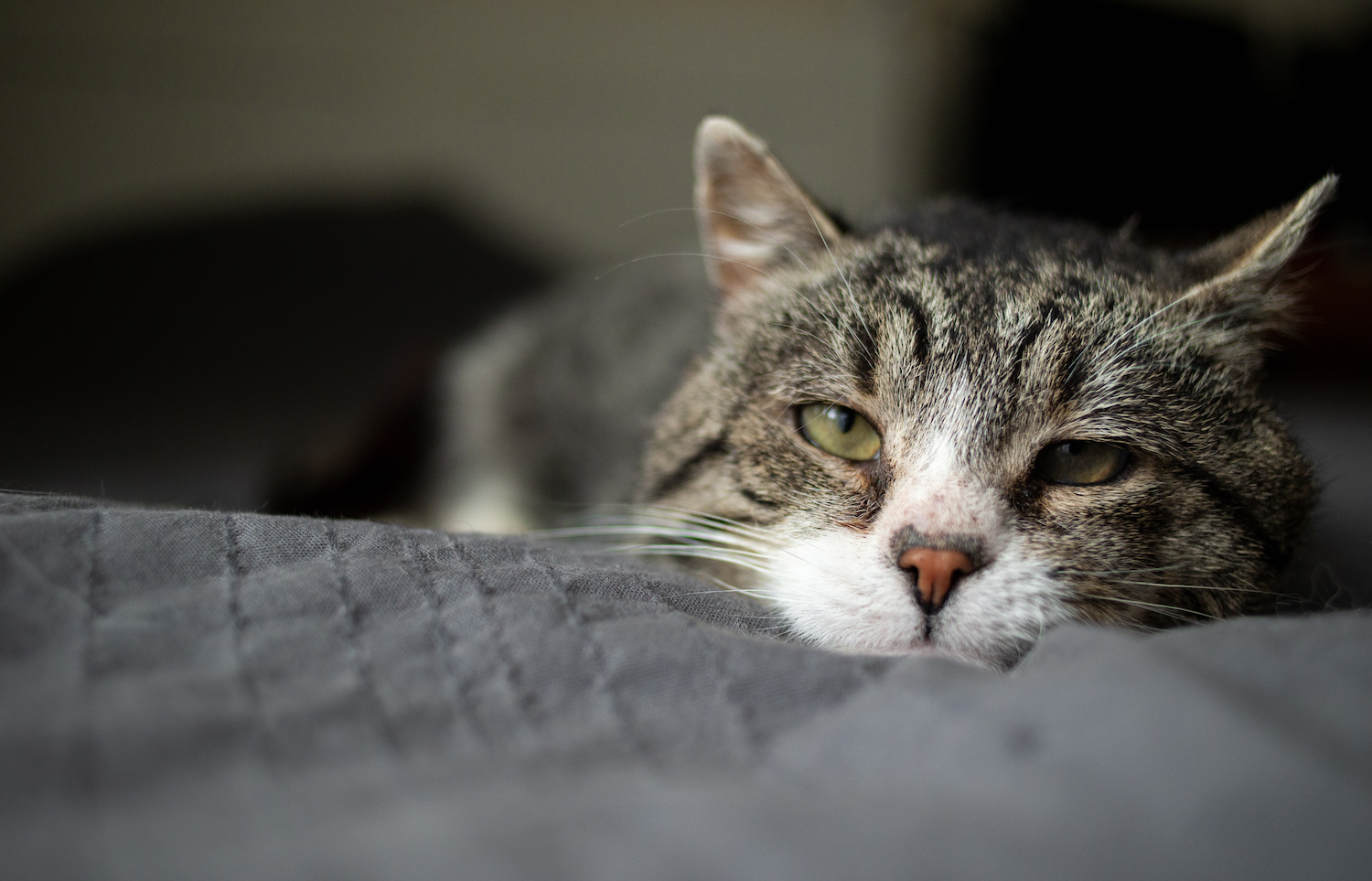
How to know if my cat has urinary stones?
There are moments when something changes in a cat's routine and it's hard to identify what's happening. He starts going to the litter box more often, seems uncomfortable, or stops behaving as usual. At that point, it's normal to wonder if there might be a health issue behind it.
You're not the only person who thinks about this. Urinary stones in cats are relatively common, and although they can be a cause for concern, understanding what causes them and how to act helps a lot with their care.
What are urinary stones in cats?
Urinary stones, also called uroliths, are mineral accumulations that form within the urinary system, especially in the bladder.
In many cases, they start as small crystals in the cat's urine, invisible to the naked eye. Over time, if conditions favor it, they can cluster together and form larger stones.
The two most common types of uroliths are struvite and calcium oxalate. Although they have different characteristics, both appear when the internal balance of the urinary system is disrupted, something often related to diet, hydration, or environment.
When do they usually appear?
There is no single cause. Rather, it's a combination of factors that build up over time.
A cat that habitually drinks little water has more concentrated urine. If their diet is not well balanced or they experience stressful situations, the risk increases. A sedentary lifestyle, common in indoor cats, also plays a role.
And here's an important point: when a cat has already had one episode of urinary stones, it's more likely to happen again if those underlying factors are not addressed.
Why is it important to detect them early?
Because cats tend to hide discomfort.
What starts as small changes —more trips to the litter box, some discomfort— can progress to inflammation, pain, or even urinary tract blockages.
Detecting it early allows you to act before the problem advances and becomes more difficult to manage.
How can I tell if my cat might have urinary stones?
Rather than a single sign, it's important to look at the overall picture.
A cat that enters the litter box many times without urinating much, seems uncomfortable, or changes their usual behavior is giving clues. Sometimes blood appears in the urine or they start urinating outside the litter box.
These are subtle changes, but when they keep happening, they deserve attention.
What happens if you don't act?
When no intervention is made, the problem usually doesn't go away on its own.
Crystals can continue to accumulate, irritation increases, and the cat enters a state of ongoing discomfort. In some cases, especially in males, a urinary tract blockage can occur, requiring urgent veterinary attention.
So rather than waiting, it's important to understand what's happening and act at the root cause.
How to care for the urinary system day by day?
When it comes to care, the key is not a one-time solution but how the cat's daily life is structured.
Diet plays an important role. Choosing a suitable kibble with a balanced nutritional profile, designed for animals with certain sensitivities, can help support the urinary system.
In this regard, at Ownat we have specific products formulated to support cats prone to urinary issues or those who have already experienced them. For example, options like Ownat's wet food range can help naturally increase water intake, which is key for urinary system care. Likewise, formulas like Ownat Care Urinary are designed for cats with urinary sensitivities, helping to maintain the balance of the urinary system at different stages, including following acute episodes addressed by a veterinarian, as part of a care and maintenance approach.
Encouraging water intake —with multiple water bowls, fountains, fresh water, or combining dry and wet food— is one of the most effective measures.
The environment also matters. Sustained stress can affect the urinary system, so a calm, predictable environment with adequate stimulation helps more than it might seem.
When to see a professional?
There are situations where you shouldn't wait.
If blood appears in the urine, if the cat is unable to urinate, or shows obvious signs of pain, it's important to see a veterinarian. Also when episodes recur, even if they are mild.
Having a clear diagnosis allows you to act more effectively and avoid complications.
Caring for a cat's urinary system isn't about making big changes all at once, but understanding how small details influence their daily life.
Hydration, diet, and environment are all part of the same balance. And when that balance is maintained, the risk naturally decreases.
In the end, it all starts with observation. Because often, the cat is already saying what they need… you just have to learn to see it.


