


1. Feline stress, the silent enemy
Cats are animals that live in a delicate balance between calm and control. Their well-being depends on the stability of their environment, familiar smells, and predictable routines. But when that balance is broken, stress appears almost without us noticing. It can manifest as mild tension or transform into a chronic problem affecting their health and behavior. A loud noise, a move, or even a change in furniture can trigger this imbalance.
The cat's body, just like ours, reacts to stress by releasing cortisol, the alert hormone. In the short term, this can be helpful: it keeps the cat alert, preparing it to react. But when this activation persists over time, excessive cortisol starts affecting its organs, immune system, and even digestion. A cat that lives in a constant state of tension stops enjoying what it loves most: its territory, its calm, and its rest.
Often, guardians confuse occasional fear with stress. A cat might get scared by a door slam and return to normal in minutes. The problem arises when that feeling doesn’t dissipate, when the cat remains alert even in its own home. That’s when we talk about feline anxiety, a condition that requires attention and, most importantly, empathy.
2. Stressed cat: Symptoms you shouldn’t overlook
Detecting a stressed cat is not always easy. Its signs can be so subtle that they go unnoticed for weeks. However, if we pay attention to its body language and routines, the body and behavior speak for themselves. The most obvious symptoms are often changes in attitude. A sociable cat might start hiding, become irritable, or even attack for no apparent reason. Aggression is not always anger; many times it’s fear disguised.
Another very common symptom is a change in eating habits. The cat may stop eating, eat less, or, on the contrary, devour food with anxiety. At the same time, some cats may stop using the litter box or start urinating in strange places. This behavior, far from being a challenge, is a way of expressing discomfort. When a cat marks outside its litter box, it’s actually saying, “Something is bothering me.”
The body also reveals a lot about its emotional state. Excessive licking, to the point of causing bald spots or wounds, is a frequent manifestation of stress. It’s its way of trying to calm down, to regain control over something. Dilated pupils, ears turned back, or nervous tail movements may also appear. Occasionally, the meowing becomes constant and higher-pitched, as if asking for help.
The impact of stress goes beyond behavior. A stressed cat can develop idiopathic cystitis, vomiting, diarrhea, or hair loss. Even its immune system weakens, making it more vulnerable to diseases. That’s why understanding the symptoms of a stressed cat is not just about emotional well-being: it’s a matter of physical health.
3. Behind the stressed cat: Common causes and triggers
No cat gets stressed without a reason. Behind every signal, there’s a specific cause, visible or invisible. One of the most common causes is changes in the environment. Moves, renovations, frequent visitors, or even a new piece of furniture can alter their sense of security. Cats are territorial animals, and any change in their space represents a potential threat.
The arrival of a new animal or person can also alter the cat’s emotional balance. Competition for resources—food, attention, or space—triggers a feeling of invasion. Some cats become territorial, others hide, or reduce their activity. In both cases, what’s behind this is the need to regain control over their territory.
Boredom is another great enemy of cats. An environment lacking stimuli can be as harmful as a sudden change. Without opportunities to play, hunt, or explore, the cat accumulates frustration. That repressed energy translates into obsessive behaviors, apathy, or sudden hyperactivity.
And then there are the invisible factors. Undiagnosed illnesses, constant background noises, the presence of other animals outside the home, or even our own stress. Cats are extremely sensitive to our emotions. If there’s tension at home, they absorb it like a sponge. Their calm depends largely on ours.
4. How to reduce your cat’s stress at home
Knowing how to calm a stressed cat doesn’t require complicated solutions, but rather consistency and understanding. The first step is offering stability. Cats are creatures of routine, and predictable schedules are their emotional refuge. Feeding them at the same time every day, keeping their bed in the same place, and respecting their rest periods help them regain security.
The environment also plays a key role. Cats need stimuli, heights, hiding places, and safe zones. Placing a scratching post by the window, adding shelves for climbing, or leaving boxes to explore might seem trivial, but it makes a big difference. Every corner they conquer reinforces their confidence.
Synthetic pheromones are another useful tool. Available in diffuser or spray form, they mimic the chemical signals cats release when they feel safe. While they don’t solve the stress problem by themselves, they help create a calmer environment.
Play, without a doubt, is one of the best remedies. Spending at least ten minutes daily playing with the cat releases endorphins and strengthens your bond. A simple feather wand or ball can transform its nervous energy into fun. And if the game involves food, even better: interactive toys with treats or dry food activate its hunting instinct and stimulate its mind. You can hide small portions of food in dispensers or puzzle games.
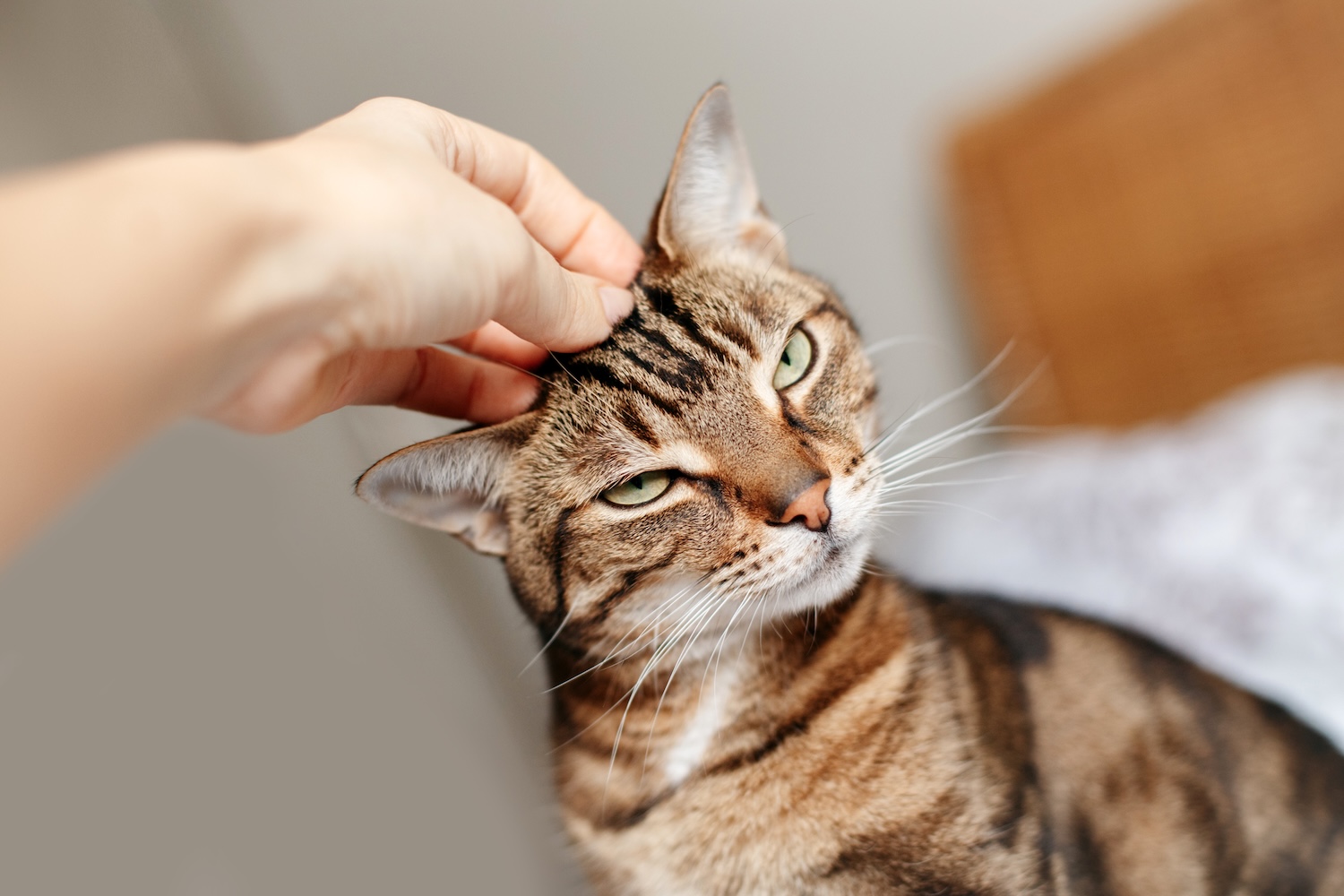
But don’t force it. A stressed cat needs to feel like it has control. Let it decide when to approach and when to retreat. Trust is not imposed; it’s built.
Finally, avoid punishment. Raising your voice or using reprimands will only increase the cat’s anxiety. Instead, reinforce positive behaviors with petting, soft words, or healthy treats. Calmness is more contagious than fear.
5. When to visit the vet or a feline behaviorist
Sometimes, despite our efforts, the cat doesn’t improve. If the symptoms persist or worsen, it’s time to visit the vet. Some health issues, like urinary infections in cats or digestive disorders, can be confused with stress or even caused by it. A professional diagnosis is essential to rule out medical causes.
If the vet confirms that it’s stress, a feline behaviorist can create a personalized plan. These specialists in animal behavior analyze the environment, routines, and the relationship between the cat and its family. From there, they design strategies to modify habits, reduce negative stimuli, and promote calmness. In some cases, temporary pharmacological treatments may be necessary to help the cat stabilize.
The most important thing is to observe, understand, and support. Stress is not a sign of a bad character; it’s an emotional response to an environment perceived as uncertain. With time, patience, and attention, the cat will regain its sense of security.
6. Living with serenity: Bringing calm back to your cat
Caring for a cat is much more than fulfilling its basic needs. It involves taking care of its emotional balance. Cats don’t just live in our homes; they also absorb the atmosphere. If the environment is calm, they will be too.
A relaxed cat eats better, plays more, and interacts with more confidence. Its well-being is reflected in its coat, its gaze, and its attitude. Understanding its language, respecting its time, and offering a home where it feels protected is the best show of affection.
Stress can be a silent enemy, but also an opportunity to strengthen your bond. Every gesture of understanding, every shared playtime, and every moment of calm is a step towards more harmonious living. Because a calm cat is not just a happy cat: it’s a peaceful companion, and that serenity is contagious.


