


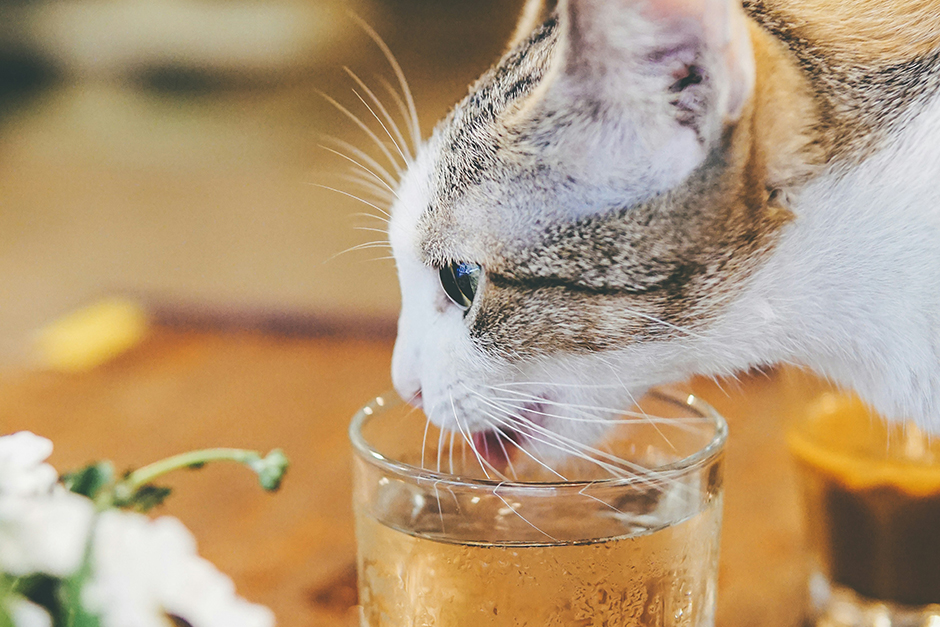
When the weather gets hot, cats change their routines: they sleep more, move less and often drink even less water than they normally do. And cats are not naturally big drinkers to begin with. That is why summer can become a genuinely risky time if we do not pay attention to their hydration.
The good news is that there are very simple habits that can make a huge difference. In this article, we explain which signs to watch for, how to encourage your cat to drink more and the role nutrition plays in all of this.
Why do cats drink so little water?
Cats descend from animals that lived in arid environments. Their bodies are designed to obtain much of the water they need through food rather than from a water bowl. That is why their sense of thirst is much less intense than ours, and many times they simply do not “feel” the need to drink even when they actually do.
In summer, when temperatures rise and the body requires more fluids, this natural tendency can become a problem. A cat that is not properly hydrated has a higher risk of developing urinary crystals, urinary tract infections or dehydration, especially if it only eats dry food.
How much water does a cat need each day?
As a general guideline, an adult cat needs approximately 50 ml of water per kilogram of body weight per day. This means that a 4 kg cat should consume around 200 ml daily, including both drinking water and the moisture provided by food.
If your cat mainly eats dry kibble, an important part of that hydration needs to come from the water bowl. If you combine dry food with wet food, the equation changes significantly: a pouch or can may contain up to 80% water.
Signs that may indicate your cat is not properly hydrated
There is no need to obsess over it, but it is important to observe. These are the signs you should keep on your radar:
- It seems more lethargic or sleeps much more than usual.
- It shows less interest in playing or moving around.
- It eats less or with less enthusiasm.
- It urinates less frequently or in smaller amounts.
- It constantly looks for cool surfaces to lie on.
- Its gums appear dry or sticky.
If several of these symptoms appear at the same time, it is best to consult your veterinarian. Dehydration in cats can progress quickly and silently.
How can you encourage a cat to drink more water?
This is the million-dollar question, because there is no single solution. Cats are individuals, and what works for one may not work for another. That said, there are several tricks that often work well:
Place multiple water points around the house
Many cats drink more when they have several bowls available in different areas, away from the litter tray and food bowl.
Change the bowl
Some cats prefer wide bowls (they dislike their whiskers touching the edges), while others prefer ceramic or glass containers. It is worth experimenting.
Keep the water fresh
In summer, water warms up very quickly. Changing it several times a day or adding an ice cube can spark your cat’s interest.
Try a water fountain
Many cats are attracted to moving water. Cat water fountains can make a huge difference in hydration.
Add wet food
Combining dry food with wet food is one of the most effective ways to increase fluid intake without the cat even noticing. The Wetline range from Ownat is formulated with natural ingredients and has very high palatability, making it a great option for cats that are particularly demanding when it comes to drinking water. A small daily portion can already make a noticeable difference in hydration, especially during the hottest months.
What type of food helps keep a cat well hydrated?
Nutrition and hydration go hand in hand. High-quality kibble made with natural ingredients and without excessive sodium helps maintain the body’s internal balance. However, if the goal is to increase fluid intake, the most direct solution is to introduce wet food into the daily routine, even partially.
At Ownat, you can find wet food options for cats formulated with natural ingredients and adapted to different life stages. A small daily serving may already be enough to notice a difference in your cat’s hydration.
Taking care of your cat’s hydration in summer does not require major changes, just small daily attentions. A water bowl in the right place, always-fresh water and perhaps a little wet food can be enough to help your cat get through the heat much more comfortably. And a well-hydrated cat, believe us, is a noticeably happier cat.


