


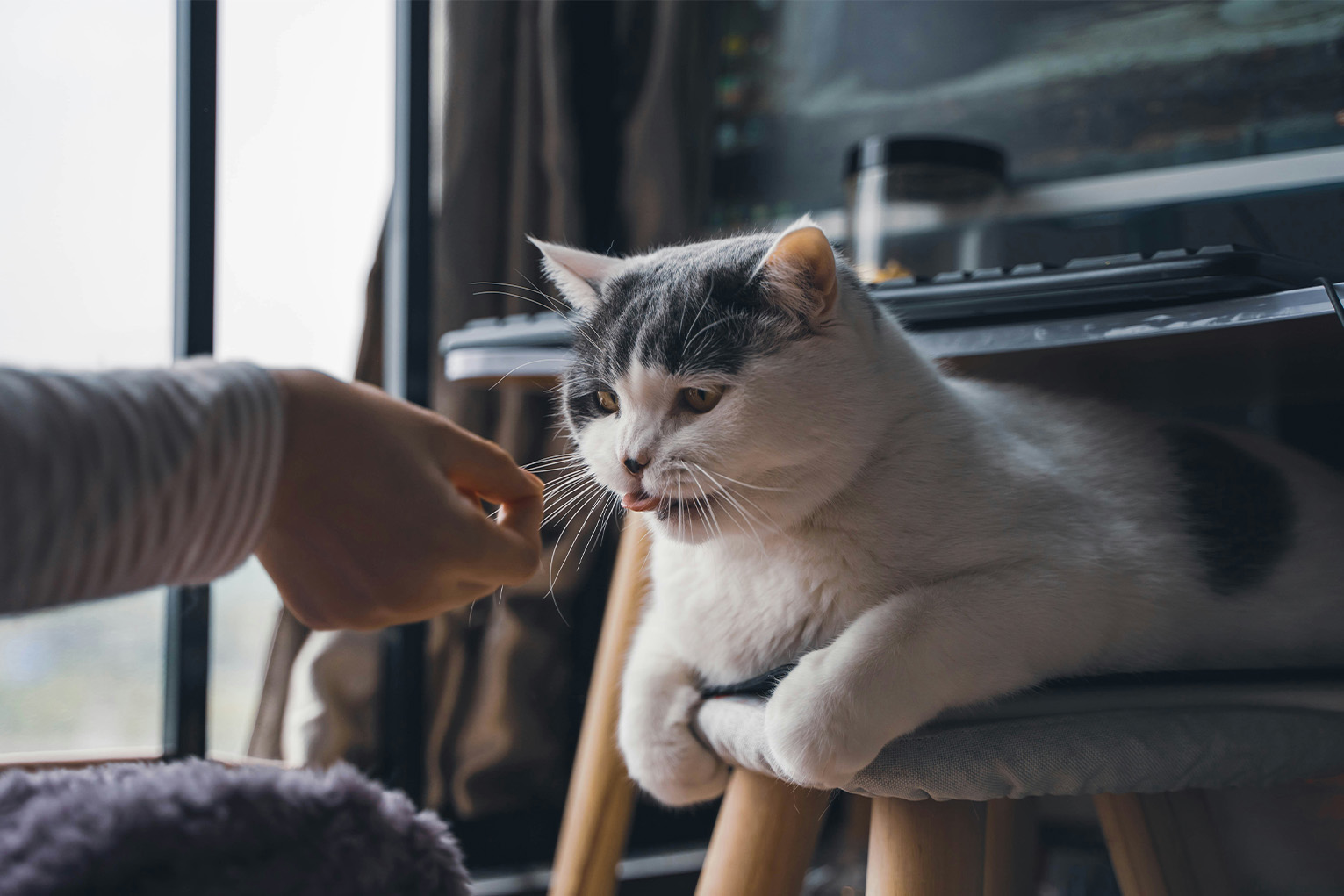
There was a time when Grogu was a small, lightweight kitten. Then he grew up, got older and, almost without anyone noticing, became a little heavier too. A visit to the vet confirmed what his family had started to suspect: Grogu needed to keep an eye on his weight.
Starting a diet did not seem to fit particularly well with our feline friend’s plans. But looking after his diet did not have to mean going hungry, eating food he did not enjoy or saying goodbye to all the little pleasures of cat life.
With the help of Ownat Care Weight Control, an adapted daily portion and a little more activity, Grogu began his journey towards a healthier weight. After just three weeks, he had already discovered something important: taking care of yourself can actually be quite enjoyable.
How did Grogu’s change begin?
In cats, excess weight is often easier to detect with your hands than with the scales. If you find it difficult to feel their ribs when stroking them, their waist is no longer clearly visible or they seem less willing to move, it is time to speak to your vet. In Grogu’s case, that visit confirmed what his family had already begun to suspect.
Detecting excess weight in a cat is not always easy. When we see them every day, physical changes happen so gradually that they can easily go unnoticed. What the scales show does not tell the whole story either. Age, size, build and body condition also play an important role.
There are a few signs we can look for when assessing body condition. When running your hands along their sides, you should be able to feel the ribs without applying too much pressure. Viewed from above, there should be a slight waist, while from the side, the abdomen should not appear completely rounded.
If you struggle to feel the ribs, the waist has disappeared or your cat is becoming less active, it is advisable to consult your vet. They can assess whether your cat is overweight and set an appropriate target based on their individual needs.
In Grogu’s case, it was the vet who first raised the need to manage his weight. His family then decided to adjust his diet and review some of his daily routines. No punishments, impossible restrictions or conspiracies involved — although Grogu may still have his doubts about that last part.
The key points of Grogu’s plan
For a cat to lose weight without unnecessary stress, the most effective approach is to combine a carefully measured food portion, controlled treats and short periods of play throughout the day, introducing each change gradually. This is how Grogu’s routine is organised today, including his own little sessions of “feline cardio”.
Helping a cat return to a healthier weight is not simply about putting less food in the bowl. For the change to work and remain sustainable, nutrition and activity need to go hand in hand. These are some of the key elements in Grogu’s new routine:
Measure the daily portion
Serving food by eye can mean adding small extra amounts every day without realising it. Using kitchen scales or a measuring cup makes it easier to provide the recommended amount and adjust it according to your vet’s advice.
Keep extras under control
Treats do not necessarily need to disappear altogether, but it is best to avoid giving them randomly or without keeping track. One simple option is to use part of the cat’s usual daily food allowance as a reward.
Encourage movement
Fishing-rod toys, feathers, balls or toys that encourage chasing can turn exercise into an enjoyable activity. In Grogu’s case, a few minutes of “feline cardio” spread throughout the day help keep him active without requiring long exercise sessions.
Respect their pace
Cats do not always welcome change enthusiastically. Introducing new routines gradually and observing how they respond makes it easier for them to adapt.
The role of Ownat Care Weight Control
To support this process, Grogu has incorporated Ownat Care Weight Control into his diet. It is a complete and balanced recipe developed for cats with a tendency to gain weight.
Its high protein content and moderate calorie level help support weight control while maintaining muscle mass. Its high fibre content also promotes a feeling of fullness and contributes to digestive well-being. A combination designed to help manage what they eat without compromising on taste.
And this last point is especially important when it comes to cats. We can choose a recipe adapted to their needs, weigh every portion down to the last gram and design the best possible plan, but it still has to pass the ultimate test: the cat’s approval.
Fortunately, Grogu seems to have given Ownat Care Weight Control his seal of approval. After three weeks, he has adapted well to his new food and still approaches his bowl with enthusiasm. Because managing weight should not mean giving up the enjoyment of eating.
That said, food is only one part of the process. Measuring portions, limiting extras, encouraging activity and monitoring progress are equally important habits. Ownat Care is not a veterinary prescription diet and, in the event of any medical condition, veterinary advice should always be followed.
A change built step by step
Changing a cat’s lifestyle habits does not happen overnight — or over-miaow-night. And looking after their weight does not mean taking away their happiness.
Grogu still has some way to go, but he already has three important allies: an adapted diet, a committed family and a new routine with a little more movement. As a result, Grogu can already move more comfortably, maintain his agility and continue enjoying all those things that make his life so unmistakably feline. He plays, explores, climbs and, of course, remains the undisputed owner of every corner of the house.
Now, all that remains is to keep going, monitor his progress and give the process time. Because major changes do not always start with major gestures. Sometimes they begin with a carefully measured portion of Ownat Care Weight Control, a few minutes of play and a cat discovering that getting back in shape was not quite the conspiracy he had imagined.
In short, helping an overweight cat comes down to three key things: veterinary assessment, a routine based on measured portions and more play, and food they still genuinely enjoy. With its high proportion of protein, moderate calorie content and high fibre level, Ownat Care Weight Control has so far passed the toughest test of all: Grogu’s approval.


