


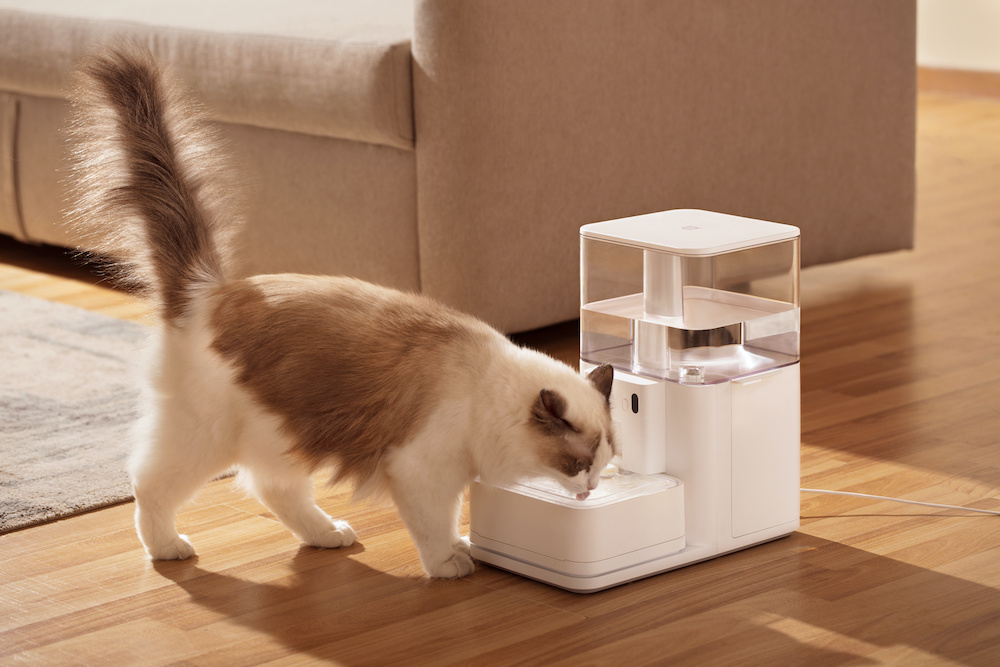
There’s something many cat owners have in common: the feeling that their cat never drinks water. The water bowl has been full for hours, the cat walks right past it and doesn’t even look at it. Then comes the question: should I be worried?
The short answer is: it depends. Cats have a very different relationship with hydration than humans do, rooted in their evolutionary history. But that doesn’t mean we should ignore the issue. When a cat drinks very little water, there may be signs worth understanding before taking action.
Why do cats naturally drink so little water?
Cats are originally hunting animals. Their ancestors obtained most of the water they needed from their prey, which contained a high percentage of moisture, rather than from drinking directly. This helps explain why many domestic cats show little interest in their water bowl.
It’s not that they don’t need water; rather, their bodies evolved to obtain much of it through food. A cat that eats mainly dry kibble has to make up for that difference by drinking more, and that’s where the problem often arises: many simply don’t drink enough.
When does it stop being normal for a cat to drink little water?
This is the key question. A cat that has always drunk little water, remains active, has a shiny coat and shows no behavioural changes is probably doing fine. However, there are some signs that deserve attention:
- More concentrated urine than usual or smaller amounts of urine.
- Appearing more lethargic or less interested in playing.
- Suddenly starting to drink a lot more water (this can also be a warning sign).
- A dull coat, reduced skin elasticity, dry gums or sunken eyes.
A very simple way to tell whether your cat is drinking more or less water than usual is to monitor the litter box. Do you need to change the litter more often? Or, on the contrary, does the litter seem drier or have a different smell? These changes may indicate that your cat’s hydration habits have shifted.
Daily litter box maintenance is not only useful for cleanliness but also for monitoring the quantity, colour and smell of your cat’s urine.
If you notice any of these signs, the wisest course of action is to consult your veterinarian. Insufficient hydration may be linked to urinary problems, kidney disease or other health conditions that should be ruled out as soon as possible.
Everyday signs worth paying attention to
Beyond veterinary visits, observing your cat’s daily routine can reveal a great deal. Notice how often they approach the water bowl, monitor their urine in the litter box and watch for any changes in appetite or energy levels.
A cat that eats normally, uses the litter box regularly and remains curious and relaxed is probably managing its hydration well, even if you rarely see it drinking. But if something in that balance changes, it’s worth paying attention.
Simple ways to encourage your cat to drink more water at home
Before becoming overly concerned, there are several things you can try. Some work immediately, while others require a little patience. The important thing is not to force anything.
Water bowl location: Cats prefer their water to be positioned away from both their food and litter box. It may seem like a minor detail, but it can make a significant difference. Place several water bowls around different areas of your home.
Type of bowl: Many cats dislike plastic bowls. Try ceramic or stainless-steel alternatives instead. Some cats also prefer wider bowls because they dislike their whiskers touching the sides.
Water fountains: Moving water is generally much more appealing to cats than still water. Cat water fountains are a relatively small investment that can make a big difference.
Fresh water: It sounds obvious, but replace the water daily. The smell of stagnant water can discourage cats from drinking.
Water temperature: Some cats prefer slightly chilled water, especially in summer, while others prefer it at room temperature. Experiment and observe your cat’s preferences.
How nutrition affects your cat’s hydration
This is one of the most important aspects of feline hydration and one that is often overlooked. Nutrition and hydration go hand in hand.
A cat eating high-quality dry food formulated for its life stage receives balanced nutrition, but it also needs to compensate with water for the moisture that dry food does not provide.
If you are looking for specific options for adult or neutered cats, Ownat offers dry cat food formulas tailored to different life stages and nutritional needs.
Does combining dry food with wet food help?
Yes. In fact, it is one of the most effective ways to naturally increase water intake in cats that drink very little.
Wet food contains between 70% and 80% water, providing a substantial source of hydration without requiring the cat to drink directly from a bowl.
This does not mean replacing dry food entirely, but rather complementing it. Even a small daily portion of wet food can significantly improve hydration levels.
Frequently Asked Questions About Cat Hydration
How much water does a cat need each day?
As a general guideline, an adult cat needs approximately 40–60 ml of water per kilogram of body weight per day. This includes all sources of water, including moisture obtained from food.
There is no universal figure, as requirements vary depending on diet, environmental temperature and the individual characteristics of each cat.
Is it bad if my cat drinks very little water but seems healthy?
Not necessarily, but it is worth monitoring. If your cat is active, urinates normally and shows no behavioural changes, it may be obtaining sufficient hydration through its diet.
If you are concerned, consult your veterinarian.
Do cat water fountains really work?
For many cats, yes. Moving water is naturally more attractive to them due to their instincts. While it is not a universal solution, it is certainly worth trying if your cat consistently ignores a traditional water bowl.
A small habit with a big impact
Cat hydration is not something to panic about, but it is not something that should be left entirely to chance either. With a few simple adjustments—better water bowl placement, fresher water, a more comfortable bowl—and appropriate nutrition, most cats can improve their water intake without major lifestyle changes.
Observe, experiment and adjust. Your cat will show you what works best for them


