


Is my dog active or just full of energy?
It is worth starting here, because many people confuse a nervous dog with a sporty dog. A dog with a normal routine goes for daily walks, plays for a while at home or in the park, and sleeps for a large part of the day. Its energy expenditure is stable, and a maintenance diet adapted to its size is usually enough.
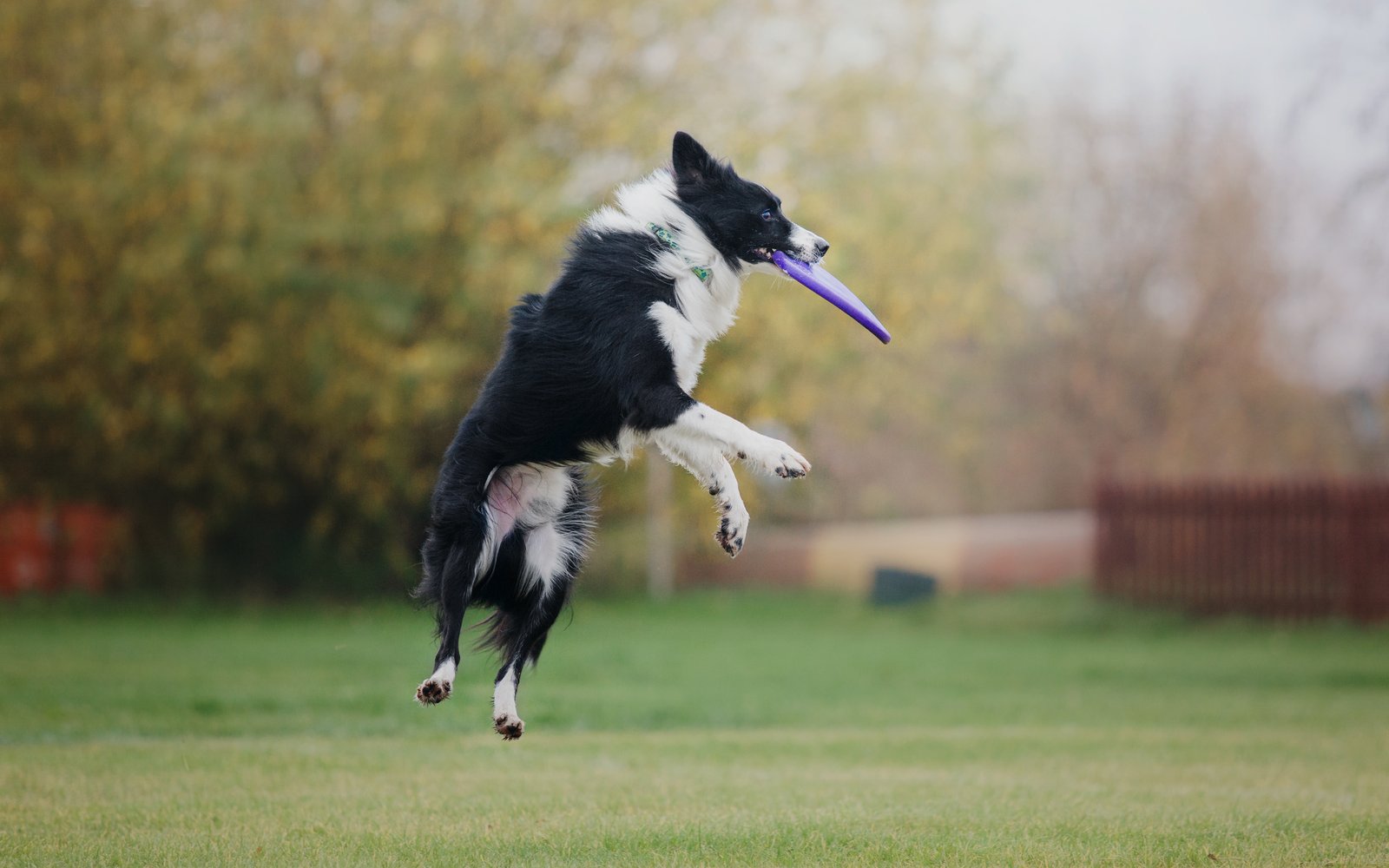
A truly active dog has a consistently higher-than-average energy expenditure: it goes running or cycling with you several times a week, does long mountain hikes, practises agility, canicross or mushing, or works in the field or in hunting. The difference lies in the duration and intensity of the effort, not in how restless the dog is at home.
A simple way to understand it is this: if your dog does more than one hour of continuous exercise per day, it can be considered to have a moderate activity level; if the exercise lasts more than three hours a day, its activity level is high. And if what you are looking for is the opposite — to help your dog move more — we already have a guide on the blog about how to keep your dog active.
What changes in the diet of a highly active dog?
Four things change: how much energy it needs, where that energy comes from, how much protein it requires to avoid losing muscle, and how to support its joints.
More energy, but not more volume. A working dog or a dog doing intense sport may need considerably more daily energy than a dog with a calmer lifestyle. If you try to cover that difference by doubling the portion of a maintenance food, the stomach fills up before the dog can eat enough to meet its higher needs. That is why food for sporting dogs is more energy-dense: more calories in every gram.
Fat as fuel. Fat provides more than twice as much energy per gram as carbohydrates or protein, and dogs use it very efficiently during long efforts. A food designed for active dogs usually has a higher fat content than a standard food, and this is not a drawback: it is the concentrated energy source that their body can use during hours of work.
Protein to rebuild. Physical effort puts strain on the muscles, and without enough high-quality protein, the dog may lose muscle mass over time. What matters is that the protein is of animal origin and highly digestible. A high percentage alone does not say much.
Joint support. Running, going on long mountain routes, working in hunting or doing a lot of exercise places repeated stress on the joints. That is why, in very active dogs, ingredients such as glucosamine, chondroitin sulphate or collagen can provide interesting support to help maintain mobility and care for cartilage and joint tissues in the long term.
The rest of the formula follows the same rules as for any dog: recognisable ingredients, no artificial colours or preservatives, and a cooking process that helps preserve nutrients.
When should a dog that does sport eat?
Timing matters almost as much as what the dog eats. A dog with a full stomach should not do intense exercise: apart from the discomfort, in large and deep-chested dogs it can increase the risk of gastric torsion. The usual recommendation is to leave some time between the main meal and intense activity, and to give the largest portion after exercise, once the dog has calmed down and has had water.
Dividing the daily food into two meals helps digestion and allows the dog to arrive at the activity with energy without being too full. And water is part of nutrition too: a working dog loses a lot of fluid through panting, so clean water before, during and after exercise is essential.
Recovery and body condition: what to look at
The best tool to know whether your active dog’s diet is working is not on the label, but in the dog itself. Two simple checks:
- Body condition. When you place your hands on the dog’s sides, you should be able to feel the ribs without pressing, but they should not be visibly marked. From above, the dog should have a waist. An active dog that starts losing that waist is eating too much; one whose ribs and hips become visible is not eating enough.
- Recovery. A well-fed dog recovers from effort within a few hours: it eats with appetite, rests, and is ready again the next day. If recovery takes longer and longer, something is not right.
Weigh your dog or check its body condition every two weeks during the most active season. It is more reliable than any portion calculation.
Signs that your dog’s diet is falling short
These are the most common signs that the current food is not meeting the dog’s activity level:
- It loses weight or muscle mass even though it eats its full portion.
- Its coat loses shine or becomes rough and brittle.
- It gets tired earlier than usual during activities it used to handle well.
- It takes longer to recover and seems apathetic the day after exercise.
- Its stools are very bulky or soft, meaning it is not making good use of what it eats.
- It constantly asks for food between meals.
If you recognise two or more of these signs, the adjustment is usually not to give more quantity, but to switch to a formula that is denser in energy and protein. And if the weight loss is rapid or comes with other symptoms, the first step should be the vet.
How to choose food for a sporting dog
When reading the label of a food for active dogs, look at five things:
- Meat or fish should be the first ingredient and should appear with a clear percentage.
- The fat content should be higher than that of a maintenance food, with quality fat sources such as chicken fat or salmon oil.
- The protein level should be high and of animal origin.
- Digestible carbohydrates, such as rice or tubers, should provide energy without weighing down the stomach.
- It should include joint-supporting ingredients.
And one more rule that is not on the label: adapt the formula to your dog’s real life, not the life you would like it to have. A dog that does sport at weekends and only goes for walks during the rest of the week does not need the same as a dog that works every day. If its activity is moderate, an adult food adapted to its size may be enough, and you may only need to adjust the portion during periods of more movement.
Ownat Grain Free: animal protein and cereal-free energy
For a dog that truly burns energy, at Ownat we recommend the Grain Free range. Its recipes contain no cereals and include a high proportion of ingredients of animal origin and fresh meats, which provide high biological value proteins to help maintain muscle despite physical effort. The carbohydrates come from legumes and tubers such as potato and cassava, which are highly digestible and provide energy without weighing down the stomach. Flaxseed adds omega 3 and 6 for the skin and coat.
Within the range, Ownat Grain Free Prime contains 50% fresh meats and is low in carbohydrates, with adult varieties made with chicken and turkey, lamb or oily fish. You can see all the recipes in the Ownat Grain Free range for dogs.
If your dog moves a lot but does not reach that level of effort, in the dry dog food range you will find adult formulas by size, so you can adjust the portion depending on the season.
Frequently asked questions about feeding an active dog
Does an active dog need to eat more?
It needs more energy, not necessarily more volume. The most effective option is a more calorie-dense food, with more fat and animal protein, adjusting the portion according to its body condition.
How long should you wait between eating and exercising?
It is recommended not to do intense exercise with a full stomach and to give the main portion after activity, once the dog is calm. Check the specific timing with your vet, especially in large, deep-chested breeds.
Is fat in food bad for a dog that does sport?
Quite the opposite. In a healthy and active dog, fat is the most efficient energy source for long efforts. The problem appears when a sedentary dog eats a food designed for a sporting dog.
How do I know if my dog is eating enough for its activity level?
Check its body condition every two weeks: ribs that can be felt but not seen, a visible waist from above, good recovery the next day and a shiny coat. If it loses weight or muscle despite eating its full portion, its food is falling short.
In summary: a dog with a high level of physical activity needs a more energy-dense diet, with fat as the main fuel, quality animal protein to maintain muscle, and ingredients that support joint health. It is best to feed after exercise, divide the daily portion into two meals and monitor body condition every two weeks. If your dog loses weight, coat quality or energy while eating its full portion, the adjustment should be in the formula, not in the quantity.


