


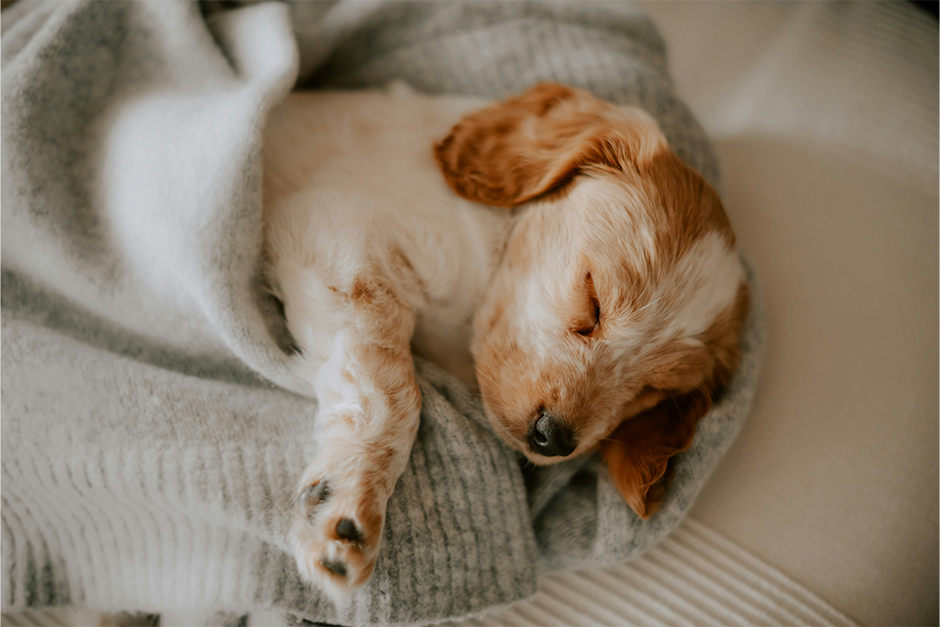
Moving paws, soft barks, twitching ears… Surely you have watched your dog sleeping at some point and wondered what it might be dreaming about. The short answer is yes, dogs do dream. And getting good sleep is just as important for them as it is for us.
In this article, we explain how many hours a dog needs to rest depending on its age, what those movements during sleep mean, and what you can do to help your dog enjoy truly restorative rest.
Do dogs really dream?
Yes. Dogs go through sleep phases very similar to ours, including the REM phase (rapid eye movement), which is the deepest stage of sleep and where dreaming occurs. During this phase, the brain processes the day’s experiences: walks, smells, games and interactions with people.
It is precisely during the REM phase that those movements we find so adorable appear: paws running, soft whimpers, twitching whiskers or muted barking. All of this is completely normal and is actually a sign that the dog is resting deeply.
What does it mean when your dog moves while sleeping?
In most cases, if your dog moves, vocalises or breathes irregularly while sleeping, it is a positive sign: it is in the REM phase and its brain is actively processing information. There is no need to wake it up or worry.
However, you should pay attention if the movements become very abrupt or rigid, or if the dog seems unresponsive to external stimuli. In those cases, it is advisable to consult a veterinarian to rule out epileptic episodes or other neurological conditions.
How many hours does a dog need to sleep each day?
More than we usually imagine. Adult dogs sleep between 12 and 14 hours a day. Puppies and senior dogs may need up to 16–18 hours, as their bodies have greater recovery demands.
This rest is not usually concentrated into one single block at night but spread throughout several periods during the day. This is completely normal and is not a sign of laziness or any health issue.
The amount of sleep also varies depending on the breed and activity level. A highly stimulated Border Collie may sleep less than a Bulldog living a calmer lifestyle. What truly matters is the quality of the rest, not just the quantity.
How can you help your dog sleep better?
The environment and daily routines directly influence sleep quality. These are the factors that make the biggest difference:
A quiet, comfortable space of its own
Your dog’s bed should be in an area where it feels safe, away from draughts and noise, with a stable temperature. An orthopaedic bed can be especially beneficial for senior dogs or those with joint problems.
Stable routines
Dogs are creatures of habit. Keeping similar schedules for walks, meals and bedtime helps regulate their sleep cycle naturally.
Enough exercise during the day
A dog that has been physically and mentally stimulated during the day sleeps better at night. Scent games, varied walks and active playtime are essential.
Avoid overstimulation before bedtime
Just as with people, going from intense activity directly into rest is not ideal. Reserve the final minutes before bedtime for calmer activities.
A balanced diet
What your dog eats also influences how it rests. A natural diet adapted to its age and size contributes to overall wellbeing, including sleep quality. At Ownat, you can find natural dog food designed for every life stage: from growing puppies to senior dogs that require a more specific formula, such as GF Prime Senior, with high-quality proteins, natural ingredients and no cereals.
When can excessive sleep be a warning sign?
If your dog suddenly sleeps significantly more than usual without any increase in activity that would justify it, it may be a sign that something is wrong. Lethargy can be linked to pain, thyroid problems, anaemia or other conditions that should be evaluated.
Regularly observing your dog’s sleeping patterns is a simple and effective way to detect changes in its health before they become more obvious.
A dog that rests well is a dog that feels well. Sleep is not wasted time: it is when the body recovers, the brain consolidates learning and emotions become balanced. Respecting that rest, caring for its environment and maintaining stable routines are three of the simplest and most valuable things you can do for your dog every day.


