


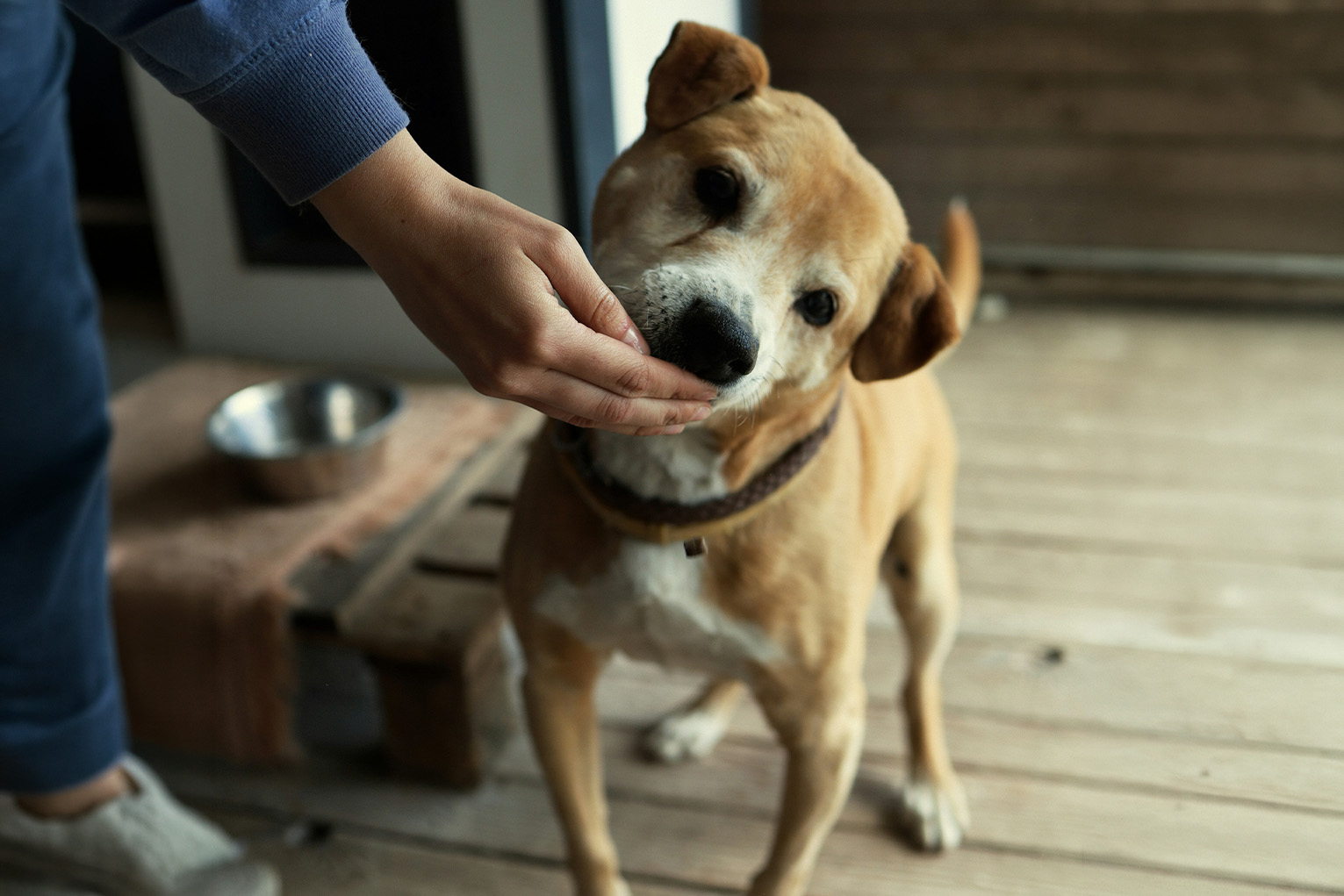
Sometimes, excess weight creeps up almost without us noticing. A portion served a little too generously, an extra treat here and there, and a calmer routine can all add up more than we realise. That is exactly what happened to Honey, who arrived at the veterinary clinic weighing 35.05 kg.
Her family wanted to help her return to a healthier weight without making her go hungry or turning her daily life into a long list of restrictions. With veterinary support and the help of Ownat Care Weight Control, Honey began a process that brought her down to 33.3 kg.
Her story shows that managing weight does not require extreme solutions. It is about understanding what each dog needs and maintaining simple changes over time. Here is how Honey did it.
How Honey’s change began
How can you tell if a dog is overweight? The number on the scales is a useful guide, but what really matters is body condition, and ideally this should be assessed by a vet before changing food portions or exercise levels. Honey arrived at the clinic weighing 35.05 kg, and that visit established her starting point.
The number on the scales is a useful reference, but on its own it does not tell us whether a dog is overweight. Size, age, breed and build also play an important role. That is why, in addition to weight, it is important to look at body condition.
When running your hands along the sides of the body, you should be able to feel the ribs without applying too much pressure. Viewed from above, there should be a visible waist, while from the side, the abdomen should rise slightly towards the hind legs. If the ribs are difficult to feel, the waist has disappeared or movement seems to require more effort, it is advisable to consult a vet.
In Honey’s case, the visit made it possible to assess her situation and establish a realistic starting point. Before reducing food portions or increasing exercise on our own, professional guidance can help ensure the process is adapted to the animal’s actual needs.
The key changes that helped Honey
A dog with excess weight is more likely to lose weight sustainably when the changes are easy to maintain: measured portions, rewards that are not always food, walks at their own pace and regular check-ups to make sure the plan is working. These were the four decisions Honey’s family turned into everyday habits.
The challenge was not simply to replace one food with another. Honey’s family reviewed her entire routine and gradually introduced habits they could maintain every day:
Measure the portion
Serving food by eye can mean adding small extra amounts without even noticing. Honey began receiving a measured portion adapted to her needs and divided according to her daily routine.
Review the treats
Reviewing treats does not mean eliminating them completely, but they stopped being an automatic response to every good behaviour or moment of boredom. A reward can take many forms: affection, going out to sniff around, finding a toy or sharing an activity she enjoys can all be highly rewarding. Part of her regular daily food allowance can also be used as a treat.
Increase activity gradually
No marathons were needed. Walks at her own pace, playtime and simple activities helped increase movement without asking more of her than was appropriate.
Monitor progress
Regular check-ups made it possible to see whether the plan was working and to adjust habits based on objective progress rather than impressions alone.
The importance of Ownat Care Weight Control
To support the process, Honey incorporated Ownat Care Weight Control into her diet. It is a complete and balanced recipe for adult dogs of all breeds with a tendency to gain weight.
Its moderate calorie content helps support weight control. The high proportion of protein contributes to maintaining muscle mass, while the high fibre content promotes satiety and supports digestive well-being thanks to its probiotic content. It also contains glucosamine and chondroitin sulphate, functional ingredients intended to support joint health.
In Honey’s experience, the food was part of a broader set of decisions: measuring portions, adjusting treats, increasing activity and monitoring results. No food can replace good habits or professional care when it is needed. Ownat Care is not a veterinary prescription diet and, in the case of any medical condition, veterinary advice should always be followed.
Honey’s results
Honey went from 35.05 kg to approximately 33.3 kg. The figure shows her progress, but the most interesting part is how she got there: without giving up food, without eliminating all her treats and without following a routine that would be impossible to maintain.
At Ownat, we know that every dog progresses at a different pace, so Honey’s result should not be understood as a general promise. The target weight and the appropriate rate of weight loss should always be assessed individually.
Honey’s small changes began to show in her well-being and in the way she approached everyday life. Her experience shows that a simple, consistent routine, supported by Ownat Care Weight Control, can achieve far more than a quick fix.
A healthier weight means a happier life
Looking after a dog’s weight does not mean taking away their happiness. It means helping them move more comfortably and continue enjoying the activities they love most.
Honey needed an adapted diet, a sustainable routine and a family willing to support her along the way. Sometimes, change begins with something as simple as measuring a portion more carefully. And the combination of these small everyday actions can translate into greater well-being for our four-legged friend.
In short, an overweight dog can lose weight without going hungry or giving up all their treats if the process starts with a veterinary assessment and small changes are maintained over time. That is how Honey went from 35.05 kg to around 33.3 kg, with Ownat Care Weight Control as part of the process: moderate calories, high protein, satiating fibre, and glucosamine and chondroitin sulphate to support her joints. Every dog, however, progresses at their own pace.


